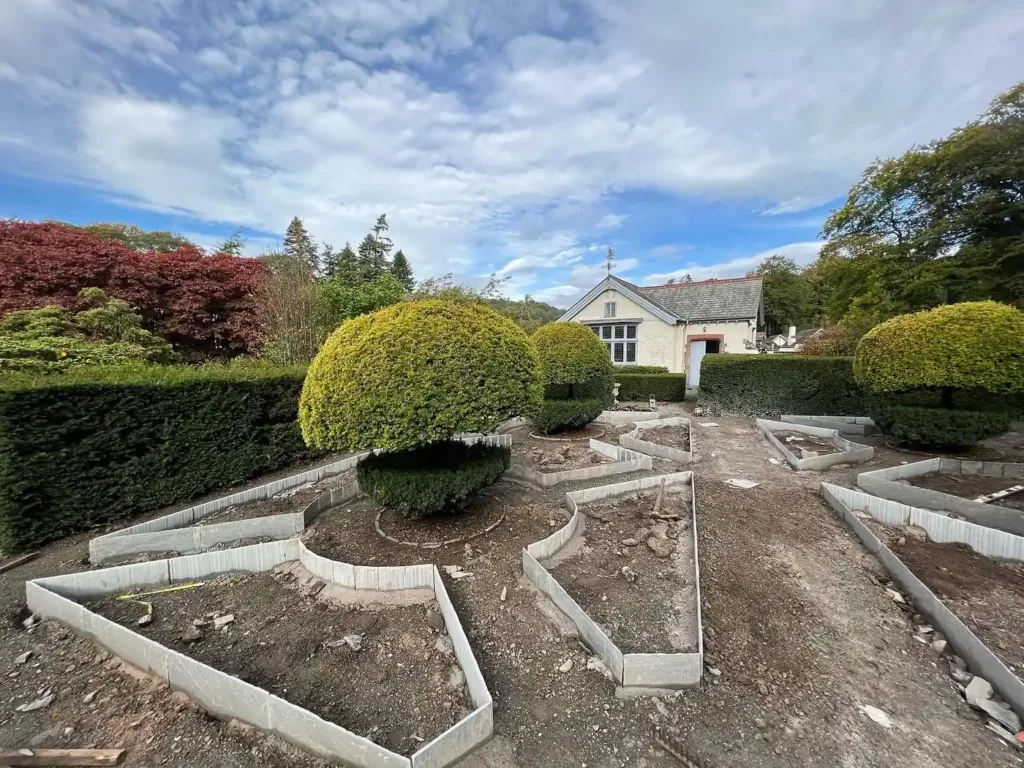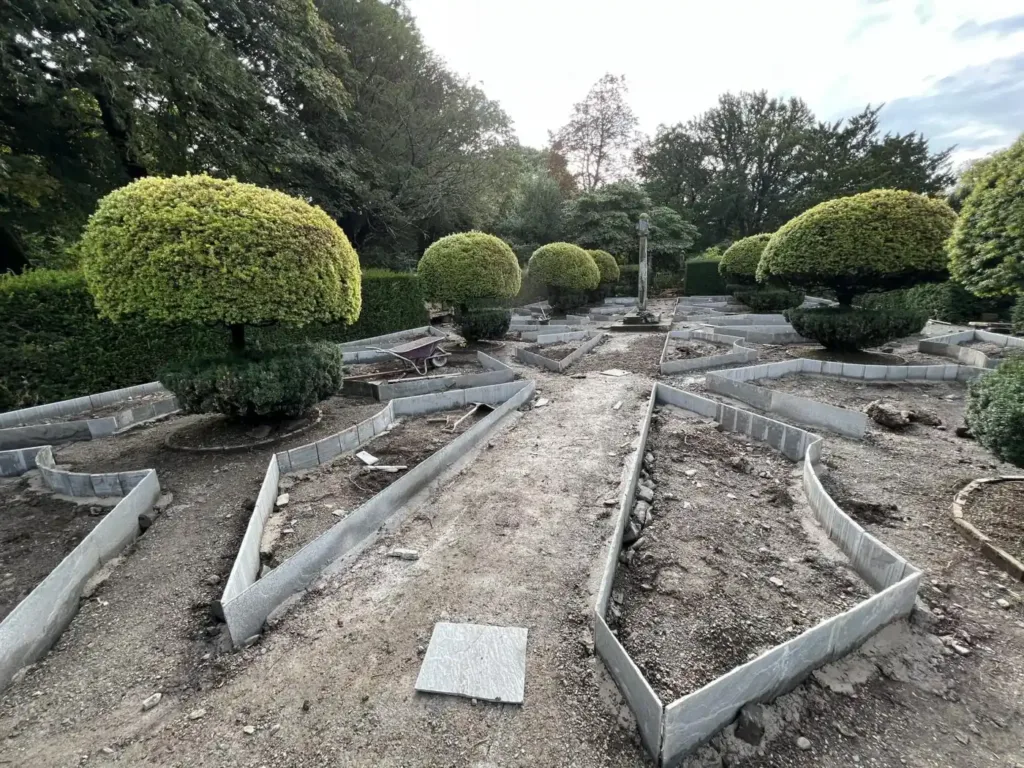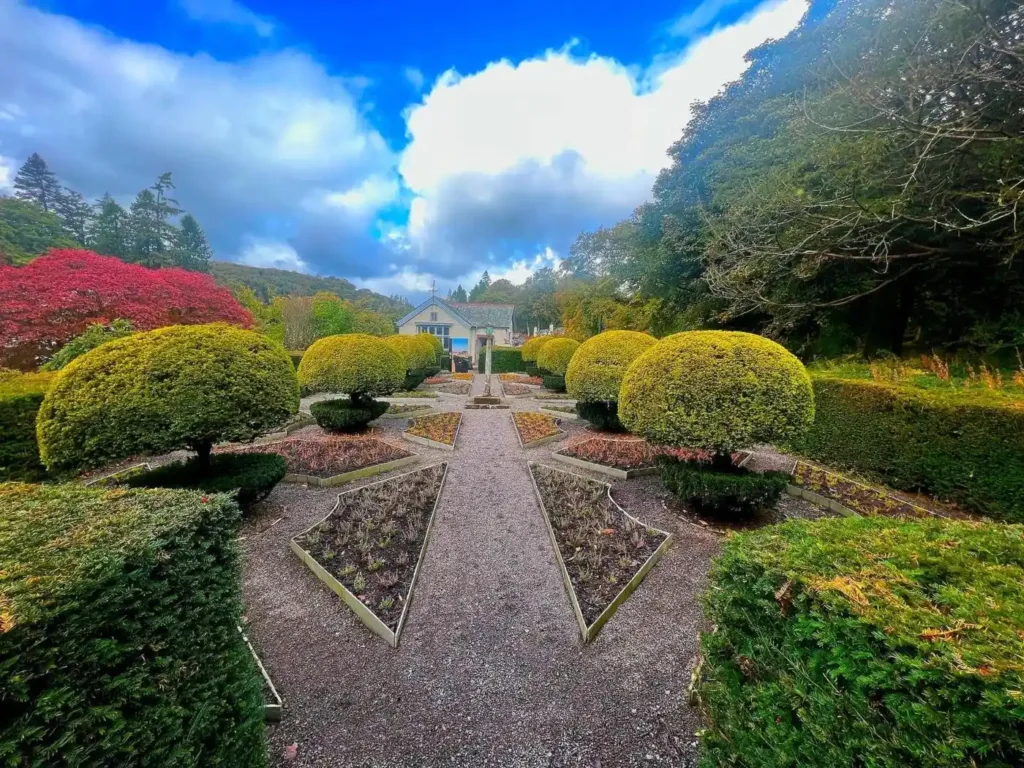
Graythwaite Hall holds one of the most significant gardens in the Lake District. Thomas Mawson was commissioned here in 1889, and it became his first major work — the garden where he developed the “composite” style that made his name. We were asked to rebuild its Dutch Garden after box blight destroyed the original planting.
Why the garden matters
Mawson designed six acres at Graythwaite between 1889 and 1895 for Colonel Sandys. It was his first significant commission and it launched a career that made him, by common consent, one of the founders of modern landscape architecture. He replaced the old stables with a formal Dutch Garden, added a rose garden south of the house, and set the whole thing into the existing woodland and natural contours rather than fighting them.
He published the design in The Art and Craft of Garden Making in 1900, dedicating the book to Colonel Sandys — and put the Dutch Garden’s sundial on the cover. The gardens are registered Grade II* on the Historic England register of parks and gardens.
The brief
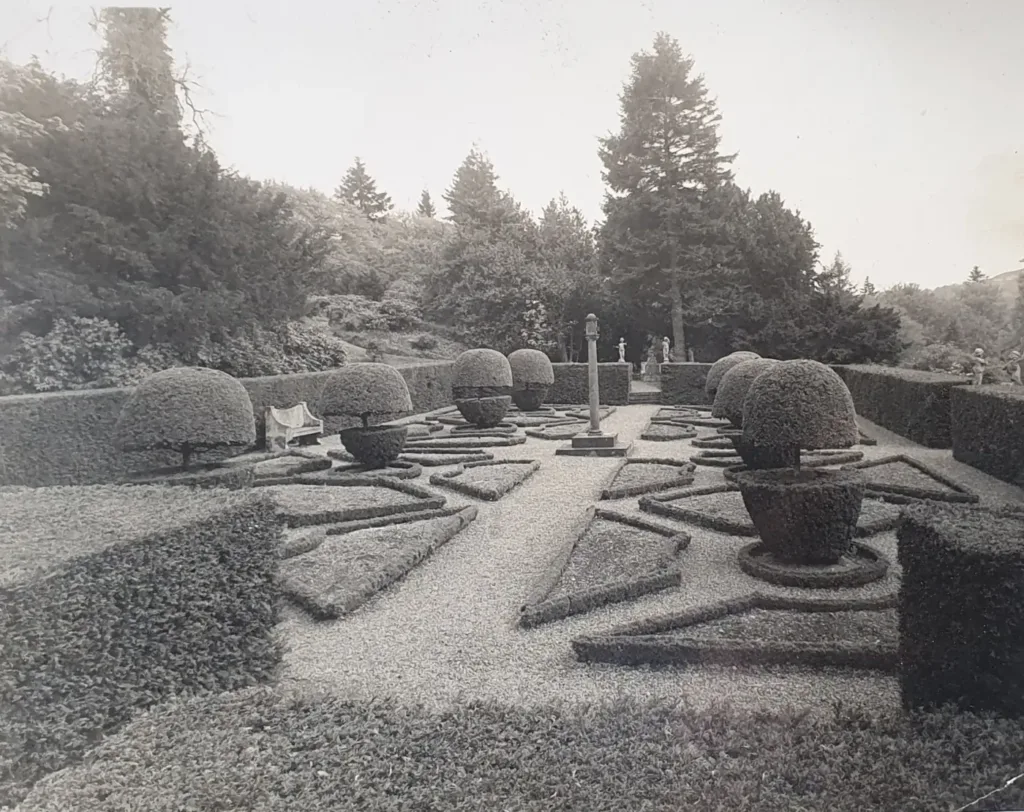
Working on a Grade II* registered garden is not the same as building a patio. The geometry is the historic asset, so the brief was to rebuild exactly to the original design — the same bed shapes, the same lines, the same levels — and to change only what the disease had made impossible to keep.
The problem: box blight
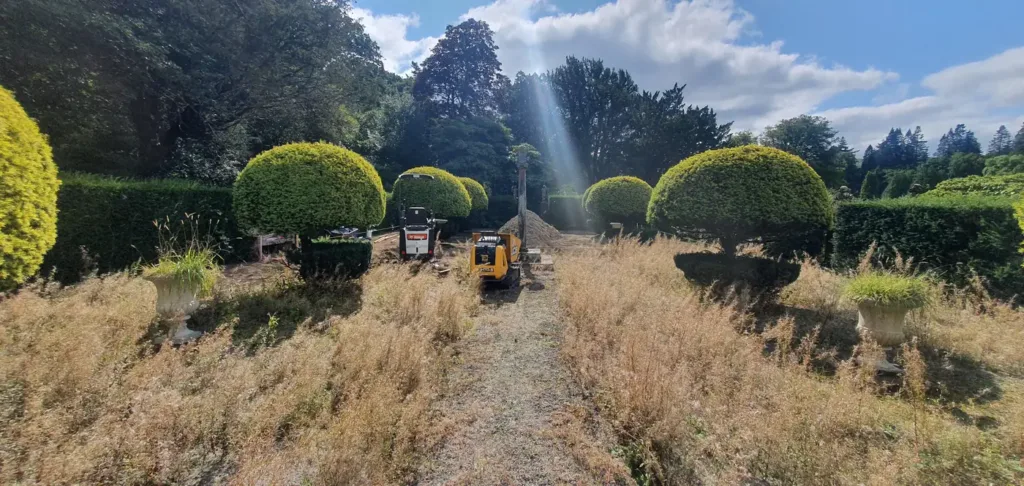
The Dutch Garden was laid out as a box parterre, and box blight had gone through it. It is a fungal disease that has destroyed historic box hedging across the country, and once it is established in the soil, replanting box in the same ground is asking for the same outcome a few seasons later. Sentiment says replant in box. Experience says you will be doing this again.
So the decision was to keep every line of Mawson’s design and change the plant. Nothing about the layout moved.
The solution: heathers
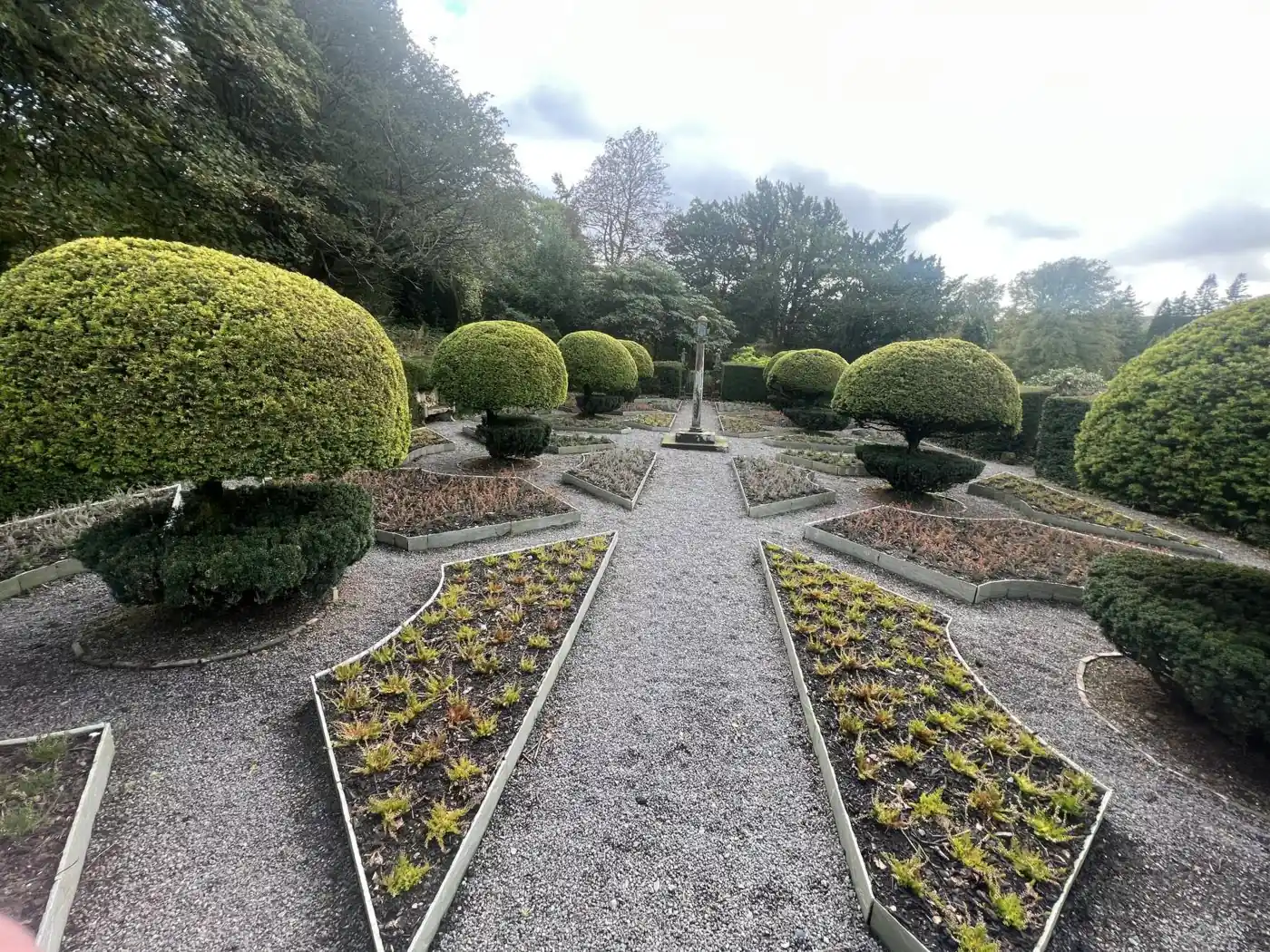
We rebuilt the garden to the original design and replanted the parterre in heathers. It turns out to be a more faithful decision than it first sounds. Mawson’s remit at Graythwaite was explicitly to make a garden that would thrive on the acid soil of the site — and heathers are exactly what that ground wants. Ericas and callunas hold a clipped line, they give structure through the winter when a parterre most needs it, and they bring seasonal colour that box never did.
They are also not susceptible to what killed the box. The geometry Mawson drew in 1889 is intact; the planting simply works with the soil rather than against it.
What the job involved
- Stripping out the blighted box and removing infected material from site
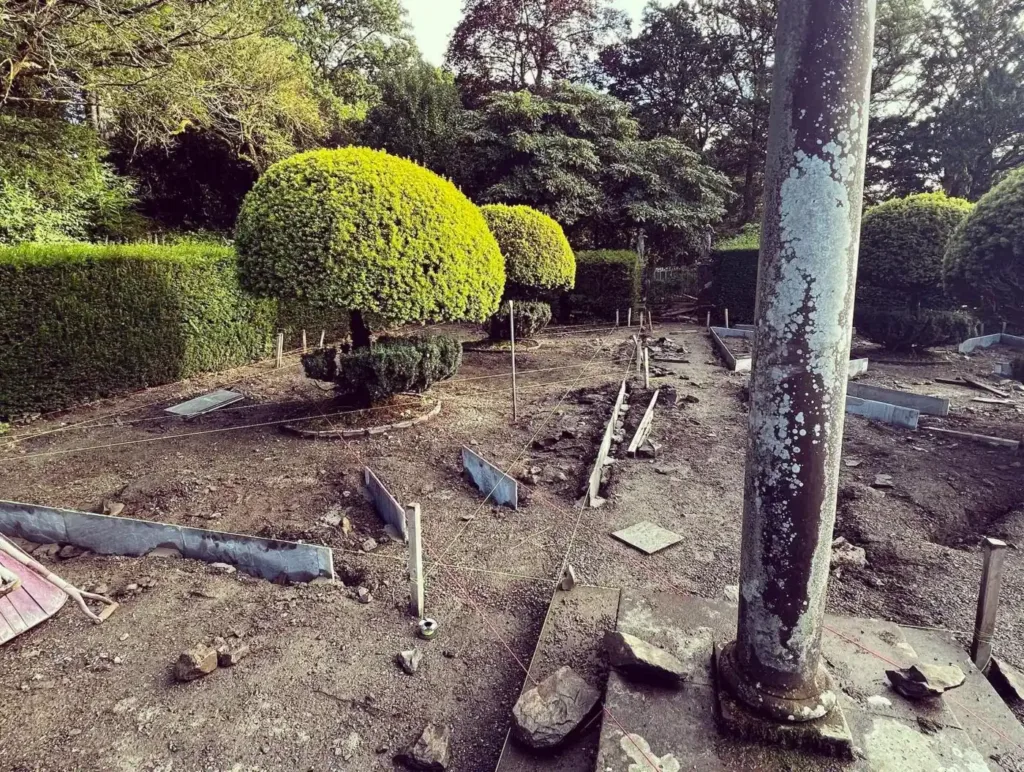
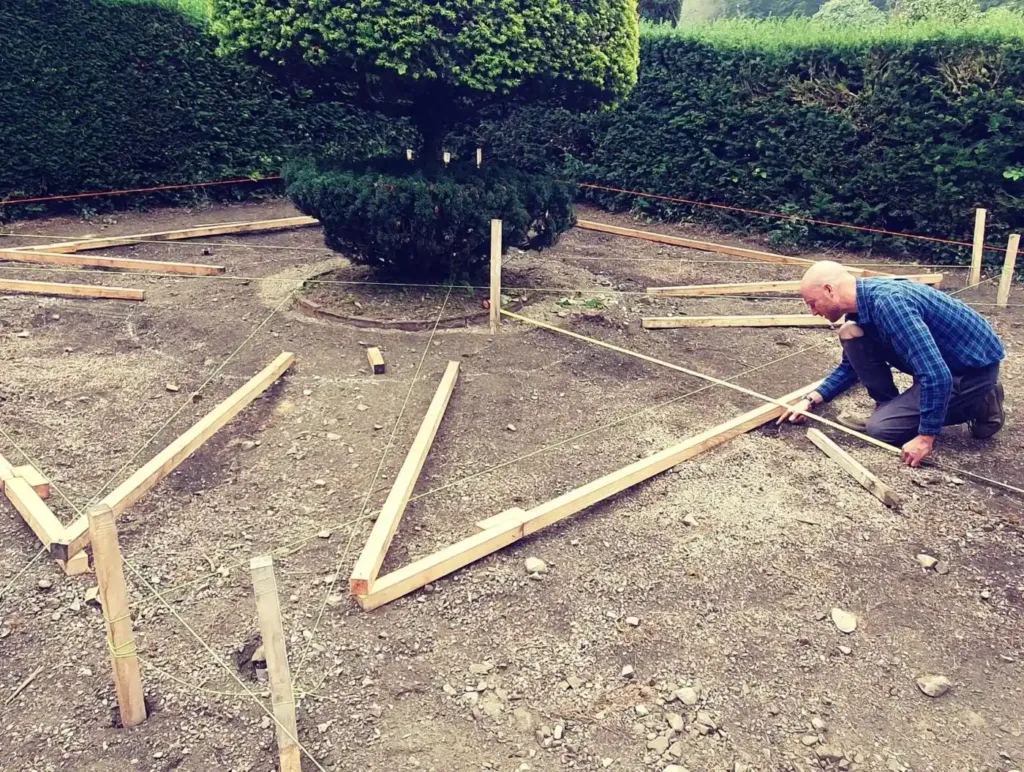
- Setting out the original bed geometry from the historic design
- Rebuilding beds, edges and levels to the existing lines
- Soil preparation suited to ericaceous planting
- Planting the parterre in heathers to a scheme that holds the formal structure
- Making good the surrounding stonework and paths
Why we are proud of it
Most landscaping is private. This is a garden people travel to see, in a design by the man who effectively invented the profession, and it will be looked at by people who know exactly what it is meant to look like. Getting to rebuild it — and to solve a real horticultural problem without compromising the design — is the best job we have been given.
If you have historic garden structure that needs work doing sympathetically, whether that is a parterre, terracing, steps or walling, it is the kind of work we take seriously. Get in touch.
Photographs from the job