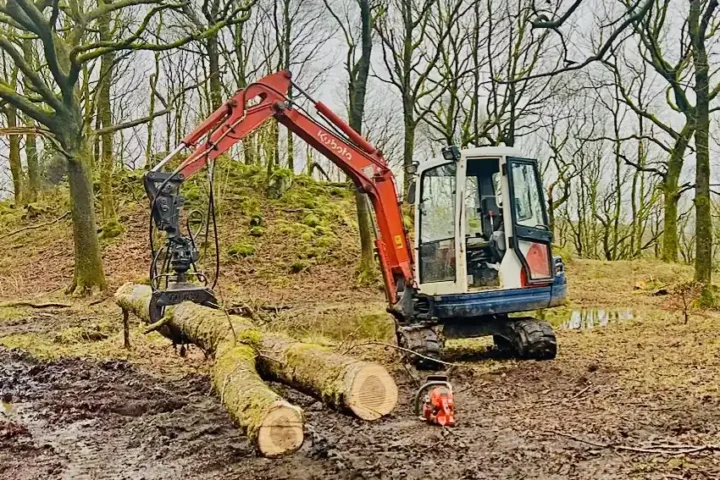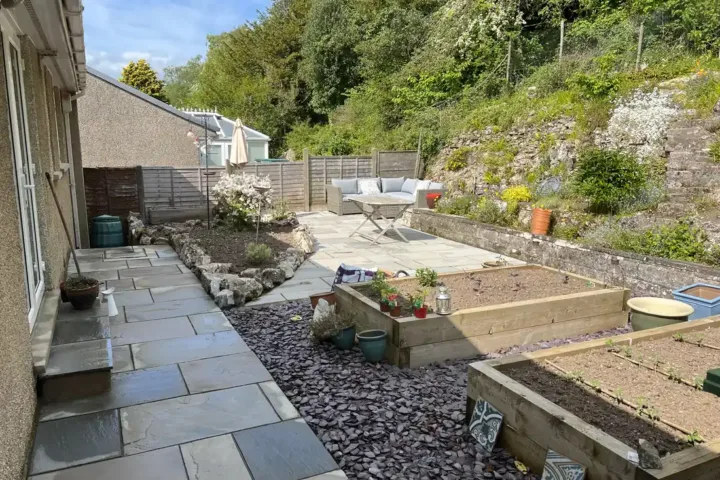
Tree work as part of a wider landscaping job, or on its own. Felling, reductions, deadwooding, hedge work and stump grinding — carried out safely, with the site left clean and the arisings taken away or chipped for you to keep.
What we do
- Felling, sectional dismantling and takedowns in confined spaces
- Crown reduction, thinning and lifting
- Deadwooding and storm damage clearance
- Hedge reduction, reshaping and laying
- Stump grinding and root removal
- Site clearance of self-seeded trees and scrub
- Chipping on site, with woodchip left for mulch if you want it
Check before you cut — this one genuinely matters
Trees in this part of the country are frequently protected, and the penalties for getting it wrong are severe. Two things to check before any work starts:
- Tree Preservation Orders. A TPO makes it an offence to cut down, top, lop, uproot or wilfully damage a tree without consent. TPOs are common across South Lakeland, and they apply to trees in ordinary domestic gardens, not just parkland.
- Conservation areas. Trees in a conservation area are protected regardless of whether they carry a TPO. You must give the local planning authority six weeks’ written notice before carrying out work, which gives them the opportunity to make an order. Kendal, Cartmel and Kirkby Lonsdale all have conservation areas, among others.
We will check the position with you before quoting and will not start work on a protected tree without the correct consent in place. A contractor who tells you not to worry about it is putting the liability on you, not on themselves.
Wildlife law
Nesting birds are legally protected. The main nesting season runs from roughly March to August, and that is the period when hedge cutting and scrub clearance carry the greatest risk. We plan work outside it where we can, and survey before starting where we cannot. Bats roost in mature trees and are also protected — if we find evidence, work stops until it is assessed.
Working safely on Lakeland sites
Steep ground, stone walls, overhead lines and buildings close by are all normal here, and they are why so much local tree work has to be dismantled in sections rather than simply felled. We are fully insured for tree work and will talk you through how a tree is coming down before we start, particularly where it is close to a boundary or a building.
Common questions
How do I know if my tree has a TPO?
The local planning authority holds the register and will confirm it. We can point you at the right department, and we will always ask the question before quoting.
Will you take the wood away?
Yes, or we can leave it. Plenty of customers want the timber cut to length for logs and the brash chipped for mulch — just say which you would prefer and it costs less than taking it all away.
Do you grind the stump?
We can. Stump grinding is quoted separately because it is not always wanted — if you are turfing over it or building on it, it matters; if it is at the back of a wood, it may not.
Can you reduce a tree rather than fell it?
Usually, and often that is the better answer. A sensitive crown reduction can solve a light or overhang problem while keeping a tree that took eighty years to grow.
Get a price for your job
Tell us what you are planning and we will come and look at it properly. Free quotes, no obligation, anywhere in the South Lakes.
Free quote
Tell us about the job
Fill this in and we will ring you back to arrange a site visit — usually the same day. No obligation and no hard sell: if it is not a job for us, we will say so and point you at someone who does it.
In a hurry? Ring the mobile. If we are on a digger we will call you straight back.
07919 448092