A drystone wall built properly will stand for well over a century without a scrap of mortar. One built badly will bulge within five years. The difference is entirely in the hearting, the throughs and the batter — the parts of the craft you cannot see once the wall is finished.
What we do
- Gapping — rebuilding collapsed sections of an existing wall
- Full rebuilds of field boundaries and roadside walls
- New garden and boundary walls in matching stone
- Retaining walls on sloping ground
- Wall ends, cheek ends, stiles, smoots and through-steps
- Re-cambering and re-coping walls that have lost their top
Built the Westmorland way
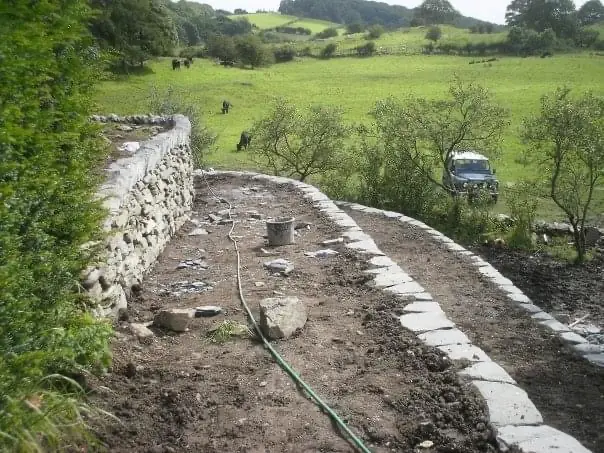
A traditional wall in this part of Cumbria is a double wall: two faces built with a deliberate inward lean, tied together with through stones and packed solid with hearting. It is topped with cams or copes set on edge.
The hearting is the part people get wrong. It is not rubble tipped down the middle to fill a void — every small stone is placed by hand to lock the two faces together. A wall that has been filled rather than hearted looks identical on day one and is the reason so many walls bulge and belly out a few winters later.
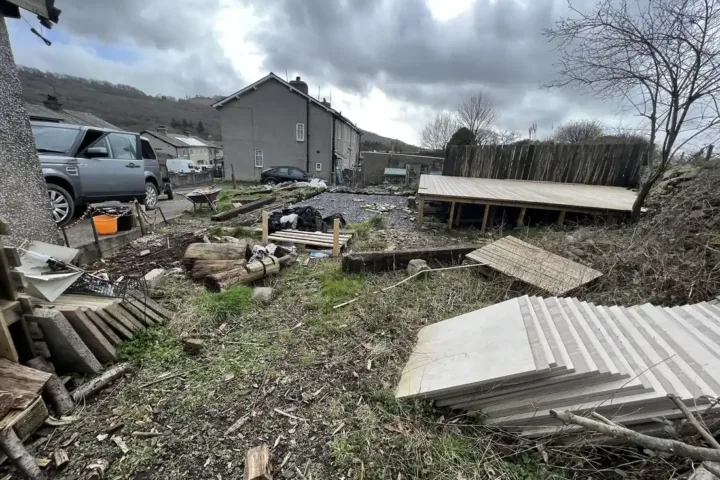
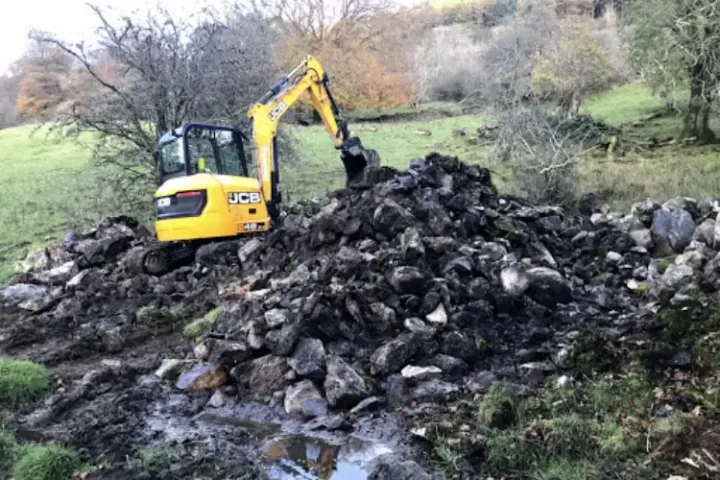
We build with the stone that belongs to the site. Where a wall has collapsed, the original stone is nearly always still there in the grass and gets reused; where we need to make up a shortfall, we source stone that matches the existing wall rather than whatever is cheapest at the builders’ merchant. On a Lakeland field boundary, mismatched stone is glaringly obvious.
Walls, the National Park and consent
Drystone walls are a defining feature of this landscape and they are taken seriously. Many field boundaries within the Lake District National Park are protected, and removing or substantially altering one can require consent — as can work to walls that form part of a listed property or sit within a conservation area.
Repairing and rebuilding an existing wall on its original line is normally straightforward. Taking one out, moving it, or putting a new opening through it is where you need to check first. We will tell you when we think a job falls into that second category, and we would always rather raise it before we start than halfway through.
Why it matters here
Because our walls are built in local stone to the traditional pattern, they suit exactly the situations where a rendered blockwork or timber alternative would look wrong — roadside boundaries, farm entrances, and gardens attached to Lakeland stone houses.
What it costs
Drystone walling is priced by the square metre of wall face, and the honest answer is that it is not cheap — it is slow, skilled, heavy work. The main variables are whether there is usable stone already on site, how far it has to be carried from where it can be tipped, and how much of the existing wall can be saved. A wall with all its own stone still lying alongside it is dramatically cheaper than one that needs stone bringing in.
Common questions
Can you repair just the gap, or does the whole wall need doing?
Usually just the gap. We take the wall back to a sound section either side of the collapse, then rebuild from the foundation up. Patching the hole without stripping back to solid work simply moves the problem along a few feet.
Do you use any mortar?
Not in a traditional drystone wall — the strength comes from the way the stones lock together. We do build mortared stone walls where the situation calls for it, such as some retaining structures, and we will explain which is appropriate for your site.
How long does a wall take to build?
A skilled waller builds a few square metres of wall face per day. A gap of a couple of metres is a day or two; a long field boundary is a project measured in weeks.
Can you build a wall that retains a bank?
Yes. A retaining drystone wall is built differently from a free-standing one — a heavier batter, larger stone at the base, and drainage behind it so water pressure does not push it out. It is a different job and priced differently.
Get a price for your job
Tell us what you are planning and we will come and look at it properly. Free quotes, no obligation, anywhere in the South Lakes.
Free quote
Tell us about the job
Fill this in and we will ring you back to arrange a site visit — usually the same day. No obligation and no hard sell: if it is not a job for us, we will say so and point you at someone who does it.
In a hurry? Ring the mobile. If we are on a digger we will call you straight back.
07919 448092