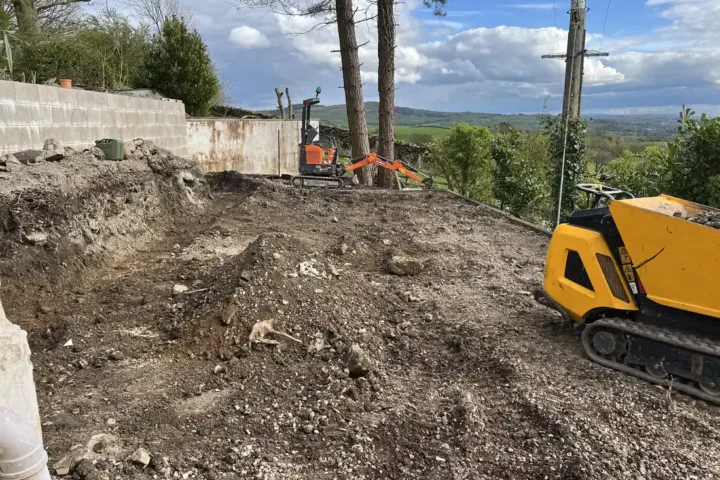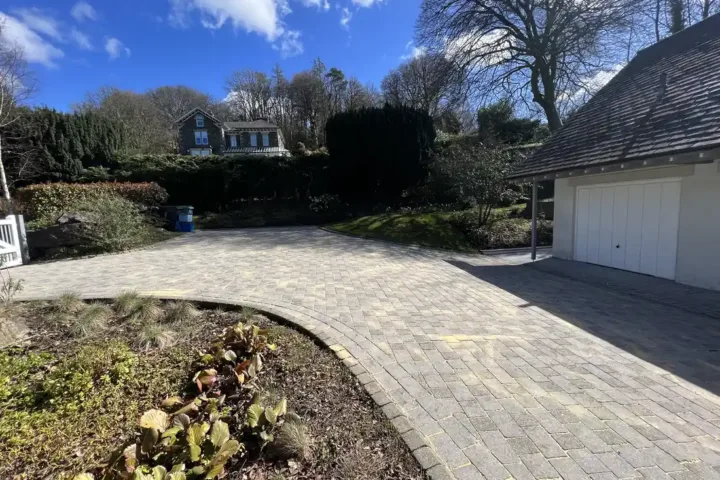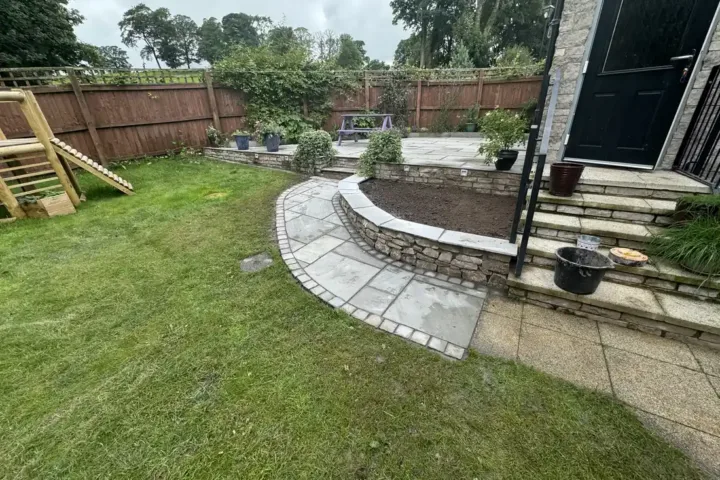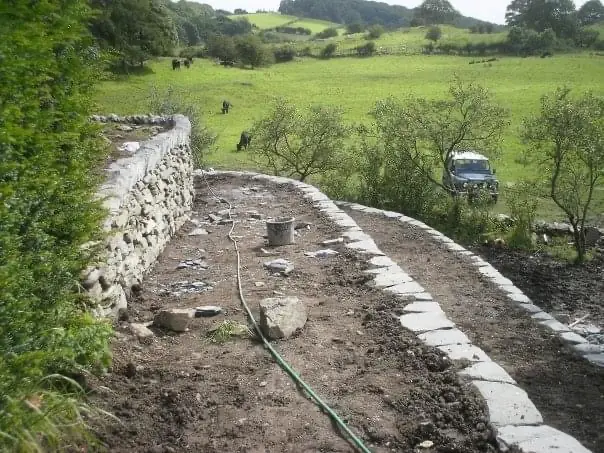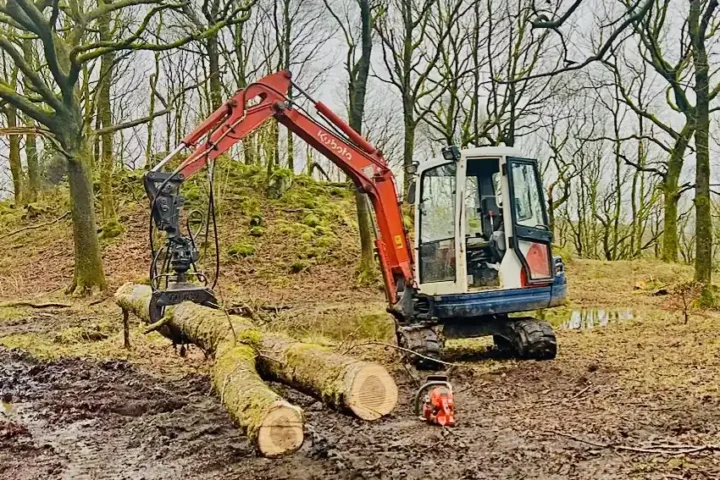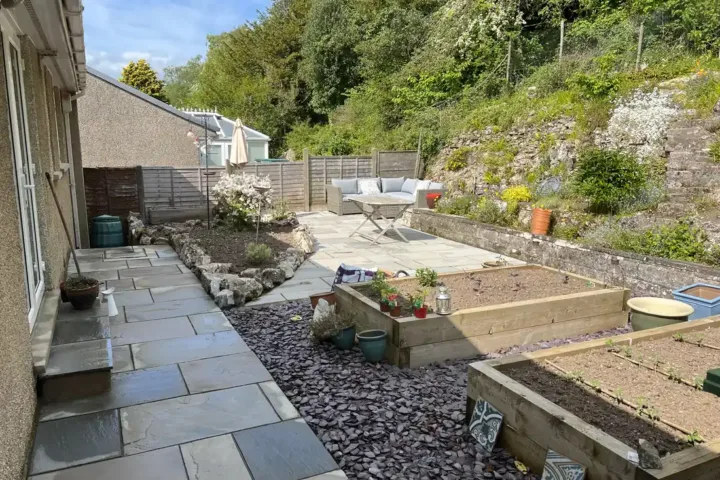
Groundworks is the part of the job nobody sees and everybody pays for twice if it is done badly. We dig, level, drain and prepare the ground for extensions, garden rooms, outbuildings and new builds across the South Lakes.
What we take on
- Strip and trench-fill footings for extensions and outbuildings
- Oversite preparation, hardcore, blinding and DPM
- Concrete bases for garden rooms, garages, hot tubs and sheds
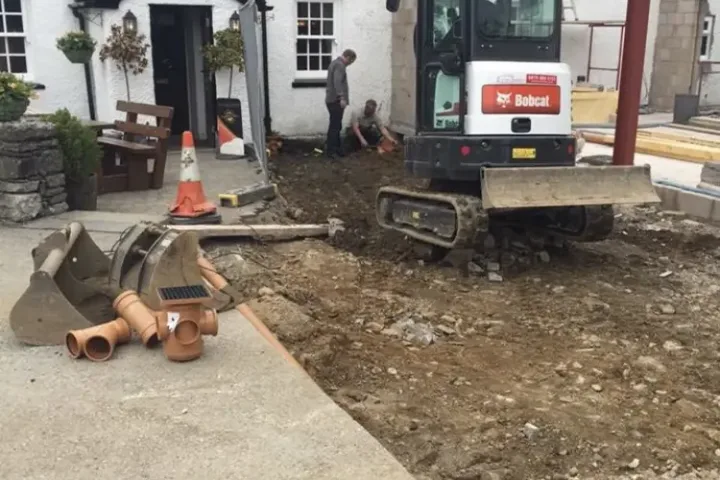
- Foul and surface water drainage, including connections and inspection chambers
- Soakaways and land drainage on wet ground
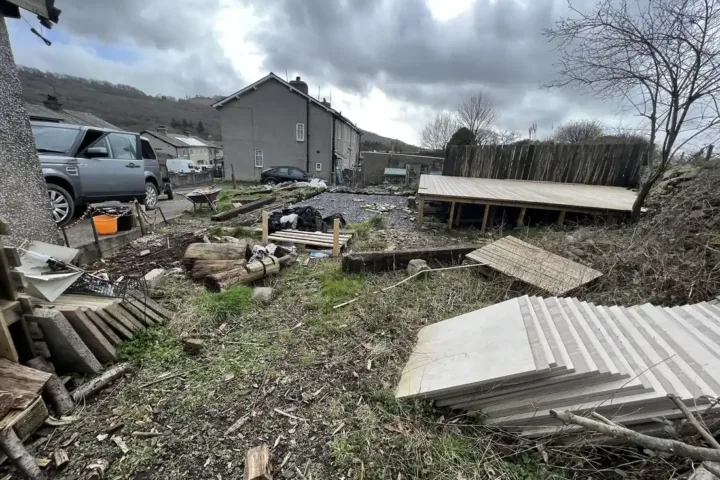
- Dig-out, muck away and levelling on sloping sites
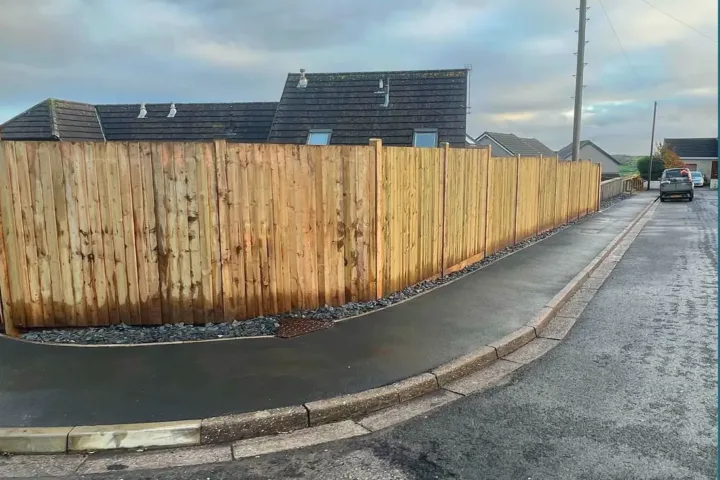
- Retaining structures where the ground needs holding back
- Service trenches for water, power and ducting
Digging in the South Lakes is not like digging elsewhere
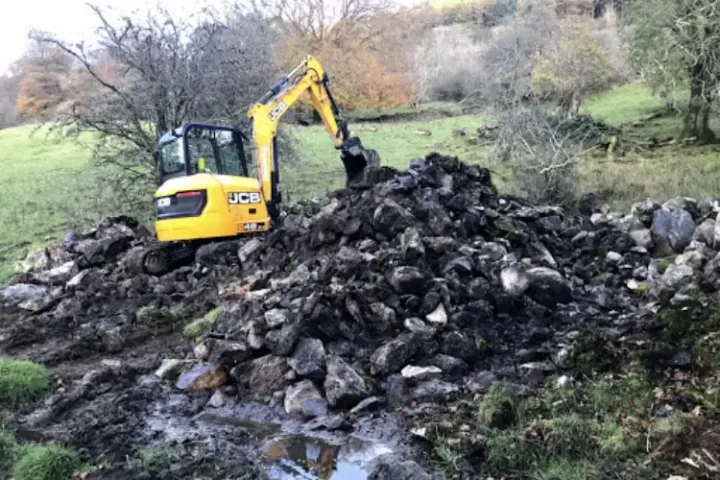
Much of South Lakeland sits on glacial till — boulder clay with cobbles and the occasional erratic the size of a car. It holds water, it does not drain, and it hides bedrock at unpredictable depths. We have hit solid rock at 400mm on one side of a garden and been down two metres in soft clay on the other side of the same house.
That is why we dig trial holes before we price anything substantial. Quoting a foundation without knowing what is under the turf is guesswork, and it is where the “unforeseen extras” on other people’s invoices come from.
A note on foundation depth
Foundation depths in this area are commonly deeper than the 750mm minimum, particularly on clay near mature trees where shrinkage becomes a factor. We agree the depth with Building Control on site at the inspection stage rather than guessing at quote stage — and we tell you the likely range up front so it is not a shock.
Building Control and the National Park
Foundations and drainage are Building Regulations work, so they need inspecting at the open-trench stage before concrete goes in. We book the inspections, meet the inspector on site and keep the job moving around their visits.
If your property sits inside the Lake District National Park, permitted development rights are more restricted than elsewhere in England, and the same applies within the Kendal, Cartmel and Kirkby Lonsdale conservation areas. We are not planning consultants, but we have worked inside those constraints long enough to flag when something looks like it will need consent before you spend money on it.
Commercial groundworks
We work for main contractors, estate managers, holiday-let operators and farms as well as private clients. We carry full public liability insurance and provide RAMS documentation, risk assessments and method statements as standard — supplied before we arrive, not chased afterwards.
What drives the price
- Access. Whether a machine can reach the dig, or whether it all comes out by barrow, is usually the single biggest cost factor.
- What comes out. Muck away is charged by the load. Rock, contaminated soil and Japanese knotweed all cost more to remove than clean subsoil.
- Depth and ground conditions. Clay near trees, running sand and high water tables all add work.
- Drainage runs. Distance to the connection point, and whether it can go by gravity or needs pumping.
- Concrete volume. Straightforward to calculate once the trench depth is known — which is why we dig trial holes first.
Common questions
Do you do the drainage as well as the footings?
Yes. Doing both with one outfit avoids the classic problem of the groundworker and the drainage contractor blaming each other for a level that does not work. We set out the drainage falls at the same time as the footings.
Can you work with my builder?
Very often we do. Plenty of our work is the groundworks package on someone else’s build. We are used to sequencing around brickwork and joinery, and we will talk to your builder directly rather than through you.
How much notice do you need?
For a small base, usually two to three weeks. For a full foundation package, longer — and we would rather book you in properly than squeeze you in and rush it. Ring us early even if the job is months away.
Do you provide RAMS?
Yes, as standard for commercial work and on request for private jobs. Risk assessments and method statements are sent over before we come on site.
Get a price for your job
Send over what you know — even a rough sketch and a couple of photos of the site is enough for us to tell you whether it is a job for us and roughly what it will involve.
Free quote
Tell us about the job
Fill this in and we will ring you back to arrange a site visit — usually the same day. No obligation and no hard sell: if it is not a job for us, we will say so and point you at someone who does it.
In a hurry? Ring the mobile. If we are on a digger we will call you straight back.
07919 448092