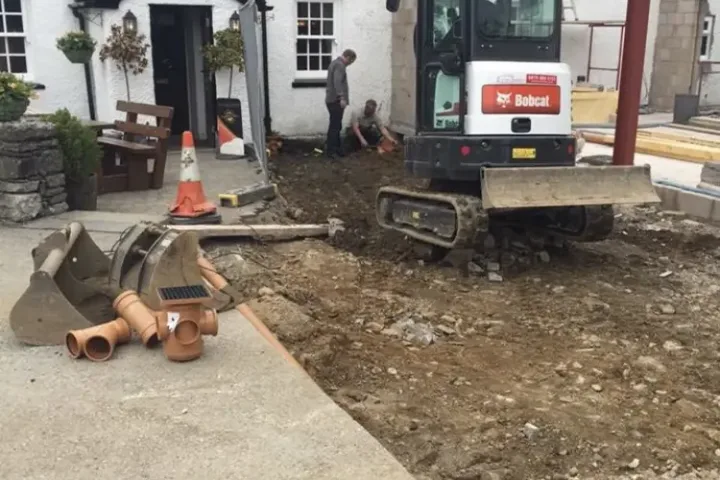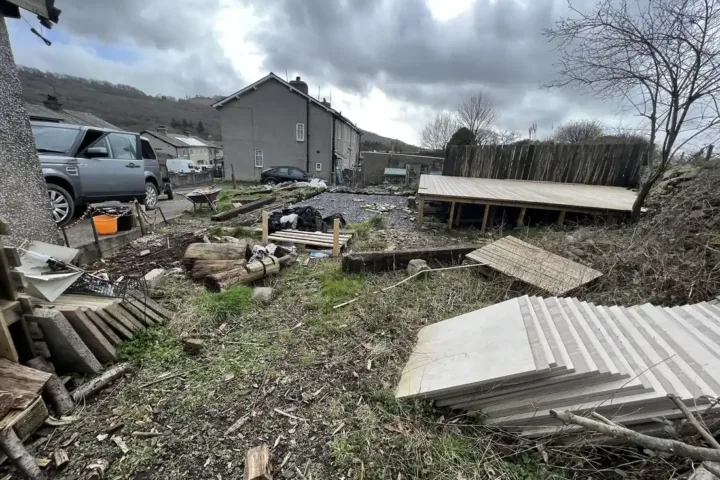
Fencing looks like the simplest job on this list and it is the one we most often get called out to replace after somebody else has done it. Posts that were not set deep enough, softwood that was never treated for ground contact, and rails fixed to the wrong side of the post all fail early — and in this weather, early means about three years.
What we install
- Stock and sheep netting with strained line wire — for fields, paddocks and smallholdings
- Post and rail — the standard for equestrian and rural boundaries
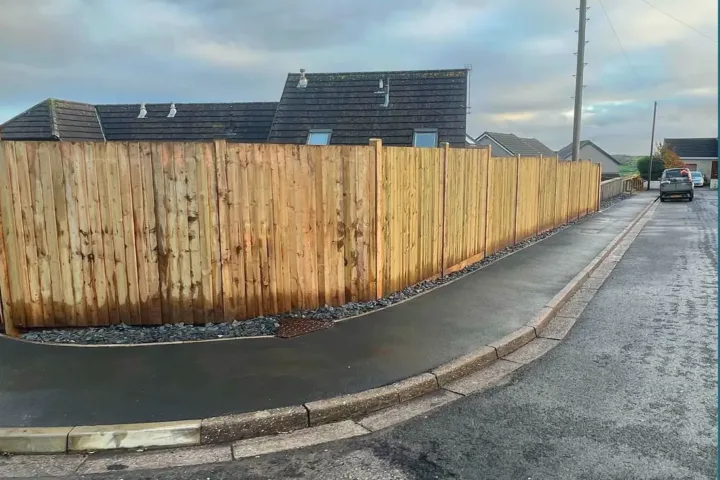
- Close board and feather edge — for privacy where a garden needs screening
- Panel fencing on concrete or timber posts
- Deer and rabbit fencing — a real requirement on plots backing onto woodland
- Field gates, pedestrian gates and hanging posts
- Post-and-wire on rocky ground, where posts have to be driven or rock-anchored
Ground that fights back
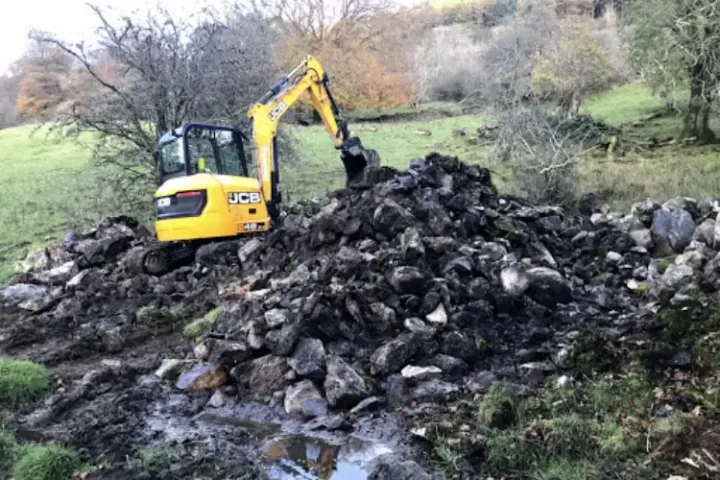
Two things make fencing harder here than in most of England: rock and wind. Shallow bedrock means a post hole that should take ten minutes can take an hour, and on some sites posts have to be driven rather than dug, or set into rock with resin anchors. Exposure means a fence on an open hillside takes loads that a suburban garden fence never sees.
We set posts deeper than the minimum, brace straining posts properly at ends, corners and changes of direction, and use pressure-treated timber rated for ground contact rather than the lighter treatment sold for panels. On exposed runs we will often recommend a gravel board and a slightly lower fence over a tall one that acts as a sail.
Boundaries — worth checking before we dig
A new fence is a good moment to be sure where your boundary actually runs. We fit the fence where you tell us the line is; establishing that line is between you and your neighbour, and it is far less awkward to sort out beforehand than after eighty metres of posts are in. If there is any doubt, your title plan is the place to start.
Height limits
Standard permitted development limits fences and gates to two metres in height, or one metre where they front a highway. Those limits are tighter in some settings, and both the National Park and conservation area status can affect what is acceptable. We will flag it if your plans look like they need checking.
Common questions
How long will a fence last?
A properly installed stock or post and rail fence in treated timber should give fifteen to twenty years in this climate; close board similar, though the boards weather faster than the frame. The posts are what fail first, which is why we spend the money there.
Can you fence on a steep slope?
Yes. On a slope, panel fencing has to be stepped, which leaves gaps at the bottom; close board or post and rail can be raked to follow the ground and generally looks far better on Lakeland terrain.
Do you remove the old fence?
Yes, removal and disposal is included and itemised in the quote.
Can you fence a large field?
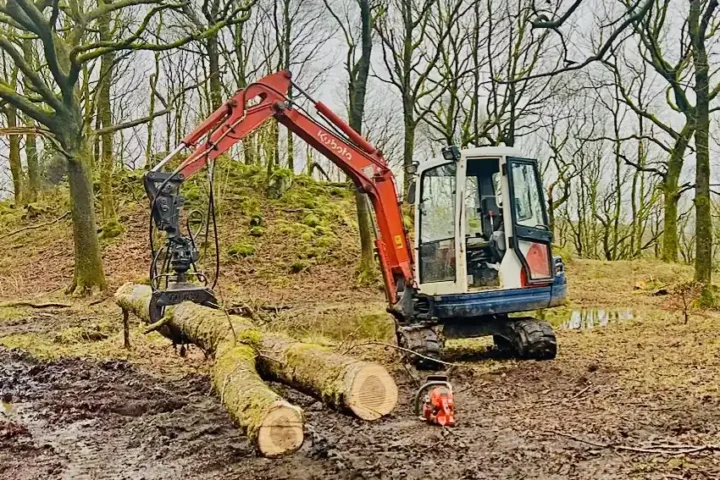
Yes — agricultural and equestrian fencing is a regular part of what we do, and we have the plant to move materials around a field without churning it up.
Get a price for your job
Tell us what you are planning and we will come and look at it properly. Free quotes, no obligation, anywhere in the South Lakes.
Free quote
Tell us about the job
Fill this in and we will ring you back to arrange a site visit — usually the same day. No obligation and no hard sell: if it is not a job for us, we will say so and point you at someone who does it.
In a hurry? Ring the mobile. If we are on a digger we will call you straight back.
07919 448092